
OSHA Portable Restroom Requirements for Construction Sites: The Complete 2025 Compliance Guide
One missing porta potty can cost your jobsite $16,131 in OSHA fines. Here is everything Oklahoma contractors need to know about 29 CFR 1926.51(c) — the exact unit ratios, hand washing rules, ADA requirements, and placement best practices that keep your site compliant and your crew productive.
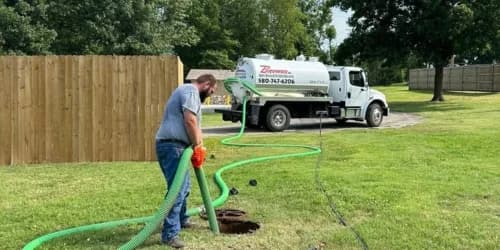
OSHA Standard 1926.51(c): What It Actually Says
OSHA's construction sanitation standard — 29 CFR 1926.51(c) — is the federal law that governs portable restroom requirements on every construction site in the United States. The standard is short but the consequences of ignoring it are not.
The rule applies to all construction employers, regardless of project size. Whether you are pouring a residential foundation in Kay County or running a commercial build in Enid, the requirements are the same. Here is what the standard mandates:
- Toilet facilities must be provided for all employees
- Facilities must be “readily accessible” to workers at all times
- Minimum ratios are set based on the number of employees on site
- All facilities must be maintained in a sanitary, operable condition
- Employers — not workers — are responsible for compliance
How Many Portable Restrooms Does Your Site Need?
The chart below shows OSHA's minimum requirements. These are based on the maximum number of workers on site during any single shift — not total employees across all shifts.
| Workers on Site | Minimum Toilets | Recommended |
|---|---|---|
| 1–20 | 1 | 2 (backup coverage) |
| 21–40 | 2 | 3 |
| 41–60 | 3 | 4 |
| 61–80 | 4 | 5 |
| 81–100 | 5 | 6 |
| 101–150 | 6–7 | 8 |
| 200+ | 1 per 40 workers | 1 per 35 workers |
Oklahoma pro tip
During summer months (June–August), Oklahoma heat regularly exceeds 100°F. Workers drink more water and use restrooms more frequently. Add 20–25% more units during peak heat to avoid lines that pull workers away from productive time.
Hand Washing Station Requirements
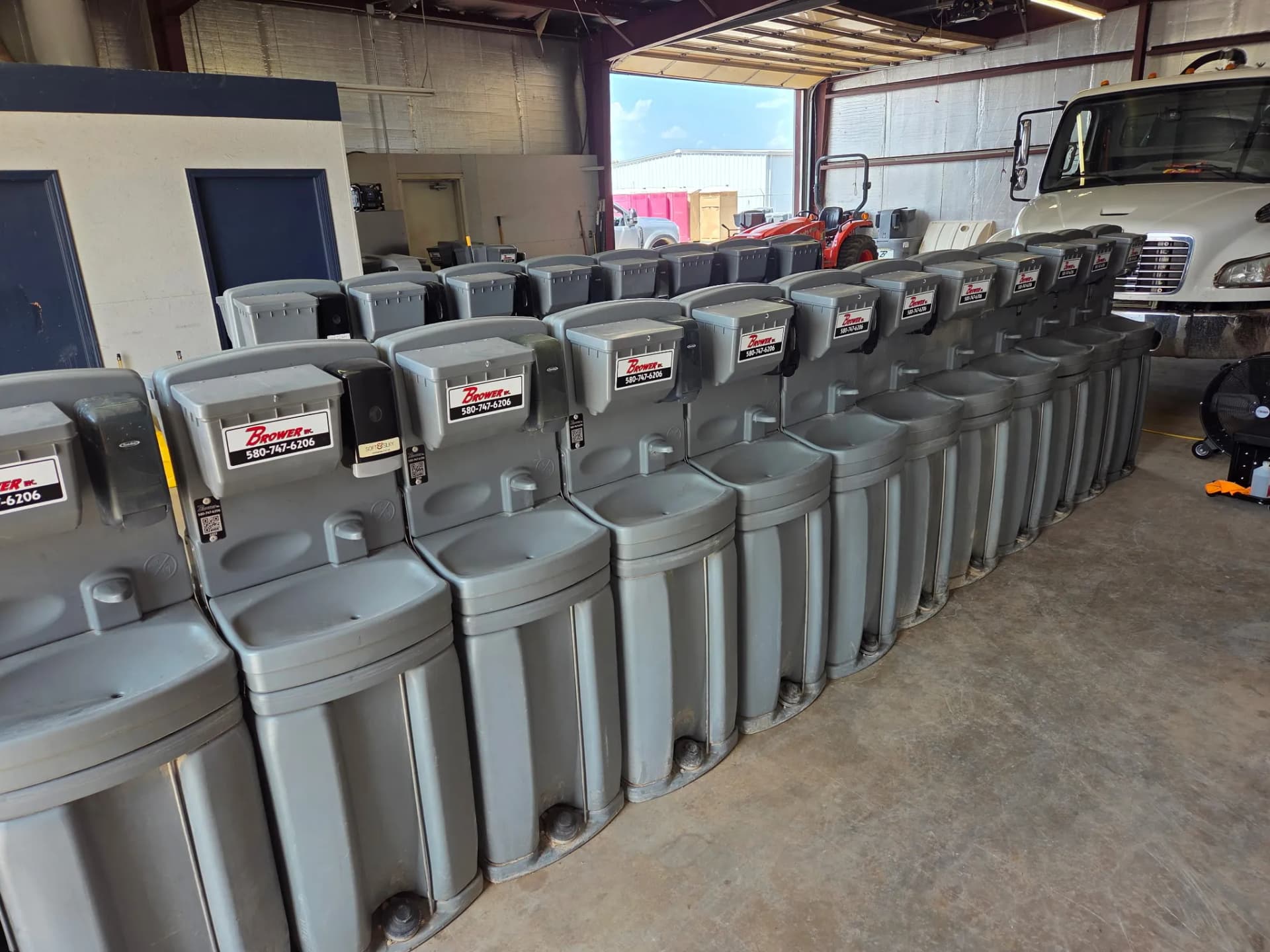
OSHA standard 1926.51(f) requires adequate hand washing facilities on all construction sites. Hand sanitizer alone does not satisfy this requirement. You must provide running potable water, soap, and individual hand towels or warm-air blowers.
The rule is straightforward: every location where portable restrooms are placed should have a portable hand washing station nearby. For construction sites handling food, paint, solvents, or hazardous materials, additional hand washing points may be required under OSHA's hazard communication standards.
- One hand washing station for every cluster of portable restrooms
- Water must be potable (clean drinking water)
- Soap and individual towels or blowers are mandatory — not optional
- Hand sanitizer can supplement but never replace hand washing
ADA-Compliant Portable Restroom Requirements
The Americans with Disabilities Act requires that construction site restroom facilities be accessible to workers with disabilities. If any worker on your site has a mobility impairment, you are required to provide ADA-compliant portable restrooms.
ADA-compliant units are larger than standard porta potties — typically 60" x 60" or wider — with wheelchair ramp access, grab bars, and a lower toilet seat height. They cost approximately 25–40% more than standard units, but the cost of non-compliance is far higher.
Even if you do not currently have workers with disabilities on site, many general contractors in Oklahoma include at least one ADA-accessible portable restroom as standard practice. Subcontractors rotate in and out — having an accessible unit ready avoids project delays.
Where to Place Portable Restrooms on a Construction Site
OSHA says restrooms must be “readily accessible,” which is generally interpreted as within a 10-minute walk of all work areas. But smart placement goes beyond just meeting the minimum:
Near site entrances
Workers use restrooms when arriving and during breaks. Entrance placement maximizes convenience.
On level, firm ground
Avoid mud, slopes, and gravel pits. Units must sit level to function properly and stay accessible.
Away from crane swing paths
Never place units within the arc of a crane or under suspended loads. This is a separate OSHA violation.
Within 200 feet of work areas
The closer the better. Workers who have to walk 5 minutes each way lose 10+ minutes of productive time per visit.
Downwind when possible
Oklahoma wind is a factor. Position units so prevailing winds carry odors away from break and work areas.
Accessible by service truck
Your rental provider needs truck access for weekly servicing. Don't box units in behind scaffolding or materials.
Servicing Frequency: How Often Is Enough?
OSHA requires that toilet facilities be “maintained in a sanitary condition.” What that looks like in practice depends on usage. Here is a general guide:
| Usage Level | Workers per Unit | Service Frequency |
|---|---|---|
| Standard | 10–15 | Weekly |
| Heavy | 15–20 | Twice weekly |
| Extreme | 20+ | 3x/week or daily |
At Brower Inc., every long-term construction rental includes weekly servicing in the base price — pumping, cleaning, restocking, and deodorizing. Need more frequent service? Call (580) 747-6206 and we will adjust your schedule.
Common OSHA Violations and What They Cost
OSHA inspectors look for sanitation compliance on every construction site visit. These are the most common violations they cite — and the 2025 fine amounts:
No toilet facilities provided
Fine: $16,131 per violation
Insufficient number of units for worker count
Fine: $16,131 per violation
Unsanitary or inoperable facilities
Fine: $16,131 per violation
No hand washing facilities near restrooms
Fine: $16,131 per violation
Restrooms not accessible to all workers (distance or ADA)
Fine: $16,131 per violation
Willful or repeated sanitation violations
Fine: Up to $161,323 per violation
Each unit counts separately
If your site needs 5 portable restrooms and you only have 2, OSHA can cite you for 3 separate violations — that is $48,393 in fines from a single inspection. Renting extra units costs a fraction of one citation.
Long-Term Construction Rental Solutions
Most construction projects in Oklahoma run weeks to months — not days. That is why Brower Inc.'s long-term rental program is built specifically for contractors:
- Monthly billing with weekly servicing included in the base rate
- Flexible unit counts — scale up or down as your crew size changes
- ADA-compliant units available at every delivery
- Hand washing stations paired with every restroom cluster
- Serving 14 counties across Oklahoma and southern Kansas

Written by Troy Brower
Founder & Owner, Brower Inc.
Troy has spent years supplying portable restrooms to construction sites across Oklahoma — from single-home foundations in Newkirk to multi-phase commercial projects in Ponca City and Garfield County. He knows what it takes to keep a jobsite compliant, clean, and running on schedule.
Need construction site restrooms in Oklahoma?
OSHA-compliant units, hand washing stations, and ADA-accessible options — delivered and serviced weekly.
Frequently Asked Questions
OSHA standard 1926.51(c) requires a minimum of one toilet for every 20 workers on a construction site. For sites with 200 or more workers, the ratio drops to one toilet per 40 workers. These are minimums — peak shift counts, site layout, and worker spread across multiple floors or buildings often mean you need more.