
The Oklahoma Homeowner's Complete Guide to Septic System Maintenance
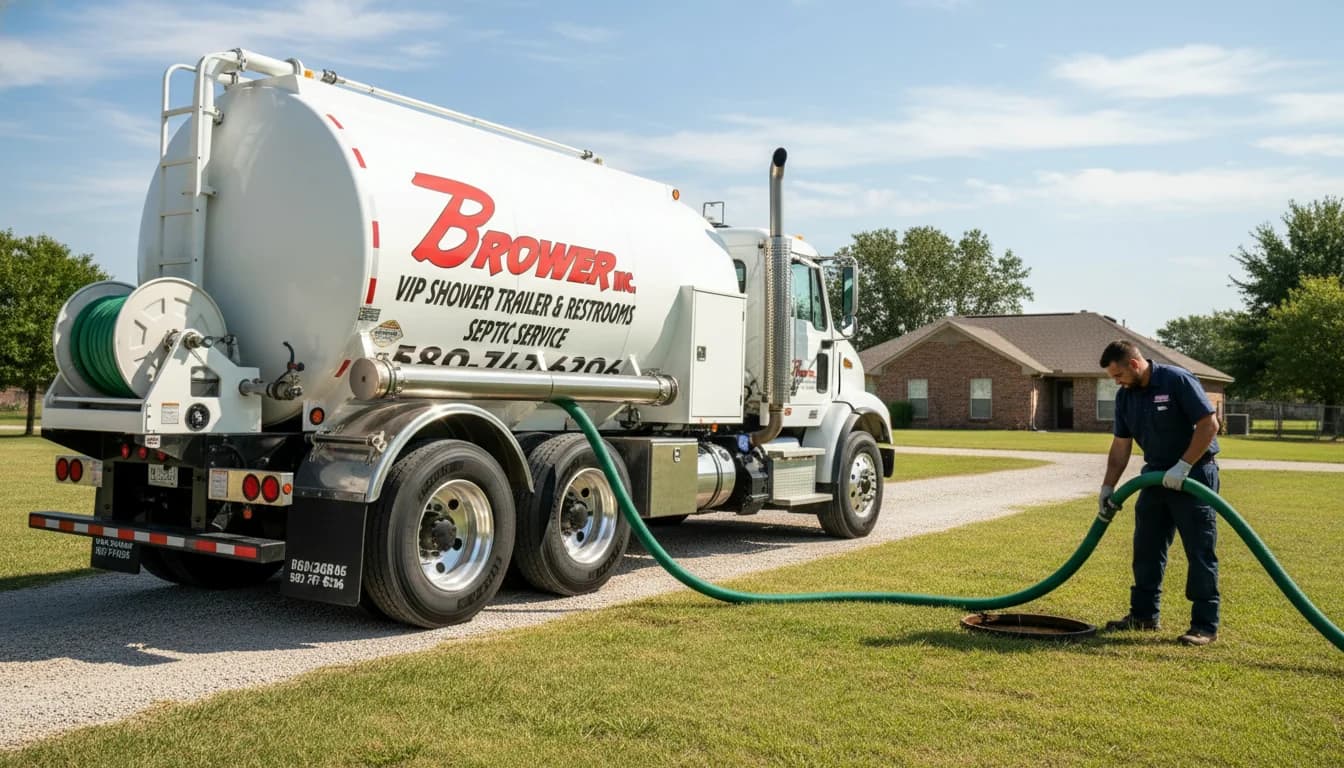
Nearly one in three Oklahoma homes relies on a septic system instead of a municipal sewer connection. That is roughly 500,000 households across the state — and according to the Oklahoma Department of Environmental Quality, a significant percentage of those systems are overdue for basic maintenance that costs less than a car payment.
If you own a home with a septic tank anywhere in Oklahoma — whether you are in rural Kay County, the outskirts of Ponca City, or a new build in Garfield County — this guide covers everything you need to keep your system healthy for decades. We will walk through how your system works, when to pump, what the warning signs look like, what Oklahoma regulations require, and what the whole thing actually costs.
No engineering degree required. Just practical advice from a team that has pumped and maintained septic systems across north-central Oklahoma for years.
Quick Answer
Most Oklahoma homeowners should have their septic tank pumped every 3 to 5 years, at a typical cost of $250 to $500. The exact interval depends on household size, tank capacity, and water usage. Regular maintenance prevents drain field failure — a repair that can cost $5,000 to $20,000+. Watch for slow drains, odors, and standing water over the drain field as warning signs that service is overdue.
How Your Septic System Works (The Simple Version)
Before you can maintain a septic system, it helps to understand what is actually happening underground. The good news: the mechanics are straightforward, even if the biology is impressive.
Every time you flush a toilet, run a dishwasher, or take a shower, the wastewater leaves your home through a single main drain line and flows into a buried septic tank — typically a concrete, fiberglass, or polyethylene container holding 1,000 to 1,500 gallons. Inside the tank, three things happen:
- Separation: Heavy solids sink to the bottom, forming a layer called sludge. Lighter materials like grease, oil, and soap float to the top, forming a scum layer. The relatively clear liquid in the middle is called effluent.
- Bacterial breakdown: Naturally occurring anaerobic bacteria (bacteria that thrive without oxygen) go to work digesting the organic solids. This biological process is the engine of your septic system — and it is the reason harsh chemicals can cause so much damage.
- Baffles: Internal baffles (walls inside the tank) prevent the scum layer and sludge from flowing out with the effluent. They are the bouncers at the door — only the relatively clean middle layer gets to leave.
The clarified effluent flows from the tank into the drain field (also called a leach field) — a network of perforated pipes buried in gravel-filled trenches. The effluent slowly percolates through the gravel and into the surrounding soil, where additional natural bacteria finish the treatment process. By the time the water reaches the groundwater table, it has been naturally filtered and treated.
The entire system is passive — no pumps, no electricity, no moving parts (in a conventional system). It works by gravity and biology. Your only job is to keep the conditions right for the bacteria and to pump out the accumulated sludge before it overwhelms the tank.
How Often Should You Pump Your Septic Tank?
The standard recommendation from the EPA and the Oklahoma DEQ is to pump your septic tank every 3 to 5 years. That range exists because no two households are identical — several factors push you toward the shorter or longer end of that window.
Factors That Change Your Pumping Interval
- Household size: More people means more wastewater. A family of five generates roughly 2.5 times the wastewater of a couple, filling the tank proportionally faster.
- Tank size: A 1,500-gallon tank has 50% more capacity than a 1,000-gallon tank. Larger tanks buy you more time between pump-outs for the same household size.
- Water usage: High-flow showerheads, frequent laundry loads, and running the dishwasher daily all push more water through the system. Every gallon that enters the tank displaces effluent into the drain field — and if solids have not had enough time to settle, they go with it.
- Garbage disposal use: A garbage disposal increases the volume of solids entering your tank by 30 to 50 percent. If you use one regularly, reduce your pumping interval by at least one year.
- Water softener backwash: Salt-based water softeners regenerate by flushing brine into the septic system. The high sodium content can disrupt bacterial activity and increase sludge volume. If you have a water softener, consider pumping on the shorter end of the schedule.
The honest answer? When in doubt, pump sooner. Pumping a year early costs the same as pumping on time. Pumping a year late can cost thousands in drain field damage.
Septic Pumping Schedule by Household Size and Tank Capacity
Use this table to estimate how often your tank needs pumping. These intervals assume normal water usage, no garbage disposal, and a conventional anaerobic system. If you use a garbage disposal, subtract one year from each estimate.
| Household Size | 750-Gallon Tank | 1,000-Gallon Tank | 1,250-Gallon Tank | 1,500-Gallon Tank |
|---|---|---|---|---|
| 1 person | Every 5 years | Every 6 years | Every 8 years | Every 9 years |
| 2 people | Every 3 years | Every 4 years | Every 5 years | Every 6 years |
| 3 people | Every 2 years | Every 3 years | Every 4 years | Every 5 years |
| 4 people | Every 1.5 years | Every 2.5 years | Every 3 years | Every 4 years |
| 5 people | Every 1 year | Every 2 years | Every 2.5 years | Every 3 years |
| 6+ people | Annually | Every 1.5 years | Every 2 years | Every 2.5 years |
Source: Adapted from EPA "A Homeowner's Guide to Septic Systems" estimates. With garbage disposal, subtract 1 year from each interval. With water softener, subtract 6 to 12 months.
Warning Signs Your Septic System Needs Service
Your septic system will not send you a notification, but it does send signals. Catching these signs early is the difference between a routine $300 pump-out and a $15,000 drain field replacement.
1. Slow Drains Throughout the House
A single slow drain is usually a localized clog. When every drain in the house is sluggish — kitchen sink, bathroom sink, shower, and bathtub — the problem is almost certainly downstream at the septic tank. The tank is full and wastewater has nowhere to go efficiently.
2. Sewage Odors Inside or Outside
If you smell rotten eggs or raw sewage near your drains, in the yard over the tank or drain field, or anywhere around your home, your system is telling you something is wrong. Gases from an overfull tank can push back through the plumbing or vent through saturated drain field soil.
3. Standing Water or Soggy Spots in the Yard
Puddles or consistently wet, soggy ground over the drain field — especially when there has been no rain — indicate that the soil can no longer absorb effluent. This is one of the most serious signs because it suggests the drain field may be failing.
4. Gurgling Pipes
Gurgling sounds when you flush a toilet or run water are caused by air trapped in the plumbing — often because wastewater is backing up from a full tank. If the gurgling is new and persistent across multiple fixtures, schedule a pumping.
5. Unusually Lush Grass Over the Drain Field
A strip of grass that is conspicuously greener, taller, and thicker than the rest of your lawn — specifically over the drain field — is being fertilized by effluent that is not being properly treated. The grass loves it. Your drain field does not. This is an early-stage warning that gives you time to act before the system fails completely.
6. Sewage Backup Into the Home
This is the emergency. If wastewater is coming back up through floor drains, toilets, or tubs, your system is critically overloaded. Stop using water immediately and call a septic professional. This is a health hazard — raw sewage contains bacteria, viruses, and parasites that can cause serious illness.
Noticing any of these signs?
Do not wait for the problem to get worse. Brower Inc. provides same-week septic pumping service across our Oklahoma and Kansas service area.
Schedule Septic Service →Oklahoma DEQ Regulations for Septic Systems
The Oklahoma Department of Environmental Quality (DEQ) regulates septic systems under Title 252, Chapter 641 — the "Individual and Small Public On-Site Sewage Treatment Systems" rules. As a homeowner, here is what you need to know:
Permits for New Installations
Any new septic system installation in Oklahoma requires a permit from the DEQ before construction begins. The permit process includes a site evaluation (soil testing, percolation testing, and setback measurements) to ensure the property can support a septic system. Your county may have additional requirements beyond the state level. The installer — not the homeowner — typically handles the permitting process, but the homeowner is ultimately responsible for ensuring the system was installed with proper permits.
Setback Requirements
Oklahoma DEQ rules specify minimum distances between septic system components and other site features. The septic tank must be at least 5 feet from any building foundation and 50 feet from any water well. Drain fields require even larger setbacks — typically 50 to 100 feet from wells, property lines, streams, and other water features. These distances exist to protect groundwater and neighboring properties.
Repairs and Modifications
Significant repairs or modifications to an existing system — replacing a drain field, adding capacity, or converting from a conventional to an aerobic system — also require DEQ permits. Minor repairs like replacing a baffle or fixing a cracked lid typically do not. When in doubt, contact your county DEQ office before starting work.
Aerobic System Maintenance Contracts
If your home has an aerobic treatment unit (ATU), Oklahoma law requires a maintenance contract with a certified provider. ATUs must be inspected at least twice per year, and the maintenance provider must submit compliance reports to the DEQ. This is not optional — failure to maintain an ATU can result in fines and orders to connect to municipal sewer if available.
Selling a Home With a Septic System
Oklahoma does not currently require a septic inspection before selling a home, but many mortgage lenders (especially FHA and VA) require one as a condition of financing. Even when not legally required, a pre-sale septic inspection and pump-out protects both buyer and seller. A failed system discovered during due diligence can delay or kill a sale. We recommend pumping and inspecting before listing — it costs far less than a price renegotiation.
What to Never Put in Your Septic System
Your septic system is a biological treatment plant, not a trash can. The bacteria inside the tank are doing the heavy lifting — and these common household items will kill them, clog your system, or both.
Grease, Fats, and Cooking Oil
Grease solidifies as it cools, forming a thick scum layer that the tank cannot process. Over time, grease builds up in the inlet and outlet baffles, blocking flow and forcing solids into the drain field. Pour cooled grease into a container and throw it in the trash — never down the drain.
Household Chemicals and Cleaners
Bleach, antibacterial soap, drain cleaners, and harsh chemical cleaners kill the bacteria your septic system depends on. Small amounts of normal household cleaning products are generally fine — the system can handle what normal living produces. But dumping a bottle of drain cleaner down the sink or using excessive amounts of bleach can set your bacterial colony back weeks.
"Flushable" Wipes
The word "flushable" on the package means the wipe will physically fit through the toilet — nothing more. Unlike toilet paper, which breaks down in water within minutes, wipes retain their structural integrity for months or years. They accumulate in the tank, wrap around baffles, and create blockages that require professional removal. If your household uses wipes, throw them in the trash.
Paint, Solvents, and Automotive Fluids
Latex paint, oil-based paint, paint thinner, gasoline, motor oil, antifreeze, and any petroleum-based product will destroy the bacterial environment in your tank and can contaminate groundwater. These materials must be disposed of at a household hazardous waste collection site — most Oklahoma counties hold annual collection events.
Medications
Flushing expired or unused medications introduces antibiotics, hormones, and other compounds that disrupt the bacterial balance in your tank and can pass through the drain field into groundwater. Oklahoma pharmacies and law enforcement agencies participate in drug take-back programs — use those instead.
Other Items to Keep Out
- Feminine hygiene products — do not break down and cause blockages
- Dental floss — wraps around components and does not decompose
- Cat litter— even "flushable" varieties add excessive solids and may contain parasites
- Coffee grounds — do not decompose in the tank and add to sludge volume
- Cigarette butts — filters are plastic and never break down
The rule of thumb: if it is not human waste or toilet paper, it does not belong in your septic system.
Time to schedule your septic service?
Troy answers the phone personally. No voicemail maze, no dispatcher — just a straight answer and a date on the calendar.
Seasonal Septic Maintenance Tips for Oklahoma
Oklahoma's climate — ice storms in January, 100-degree heat in July, and severe thunderstorms in between — puts unique demands on your septic system. Here is how to protect it through every season.
Winter (December - February): Freeze Protection
Oklahoma winters can drop below zero, especially in the northern counties around Kay County and Garfield County. While the buried tank itself rarely freezes (ground insulation and the warmth of decomposition keep it above freezing), exposed pipes and shallow drain field lines are vulnerable.
- Keep a layer of mulch or leaf cover over the drain field to insulate shallow lines
- Do not compact snow over the drain field by driving or parking vehicles on it — compacted snow conducts cold more efficiently than loose cover
- If your home will be vacant during a cold snap, run a small amount of water periodically to keep pipes from freezing
- Insulate any exposed risers or clean-out pipes above grade
Spring (March - May): Inspection Season
Spring is the best time of year to schedule your septic inspection and pumping in Oklahoma. The ground has thawed, making tank access easy, and you are ahead of the summer heat that makes pumping more unpleasant and demand higher. Spring is also when heavy rains can expose drain field problems that were hidden during the dry winter months.
- Schedule your pump-out or inspection in March or April when providers have the most availability
- Walk the drain field after spring rains — standing water or unusually soft spots warrant a professional evaluation
- Check that no tree roots have grown toward the tank or drain field over the winter
Summer (June - August): Water Management
Oklahoma summers mean higher water usage — more showers, more laundry, kids home from school, and guests visiting. All of that extra water flows through your septic system.
- Spread laundry loads throughout the week instead of doing multiple loads in one day — spacing water usage gives the tank time to process
- Fix any leaky faucets or running toilets — a single running toilet can add 200 gallons per day to your septic load
- Direct sprinkler runoff and gutter downspouts away from the drain field — saturating the field with irrigation water reduces its ability to absorb effluent
Fall (September - November): Preparation
Fall is your last comfortable window for outdoor septic work before winter. If you skipped your spring pumping, do it now.
- Pump before Thanksgiving and holiday season — extra guests dramatically increase system load, and you want maximum tank capacity heading into the busiest household water-usage period of the year
- Rake leaves away from the drain field area to prevent matting that traps moisture and reduces air circulation in the soil
- Mark the location of your tank access lids so you can find them if they are covered by snow in January
How Much Does Septic Pumping Cost in Oklahoma?
Residential septic pumping in Oklahoma typically costs $250 to $500 per pump-out. That range covers the vast majority of standard residential tanks (750 to 1,500 gallons) in our service area.
Factors That Affect Your Price
- Tank size: A 750-gallon tank takes less time to pump than a 1,500-gallon tank. Larger tanks cost more.
- Accessibility: A tank with a ground-level riser lid is quick to access. A buried tank that requires digging to expose the lid adds labor time and cost. Installing a riser (a one-time investment of $200 to $400) saves money on every future pumping.
- Distance from provider:Pumping companies factor in travel time and fuel. Living within a provider's primary service area keeps costs lower. Brower Inc. serves a 20-county area across Oklahoma and southern Kansas from our Newkirk headquarters.
- Time since last pumping: A severely neglected tank (10+ years without pumping) may require extra effort to break up and remove compacted sludge, or multiple trips if the tank is extremely full.
- Emergency vs. scheduled service: A planned pump-out during normal business hours will always cost less than an emergency call when sewage is backing into your home on a Saturday night.
| Service | Typical Cost (Oklahoma) | Notes |
|---|---|---|
| Standard residential pump-out | $250 - $500 | 750 - 1,500 gallon tank, accessible lid |
| Pump-out with buried lid (digging required) | $350 - $600 | Add $100-$150 for excavation labor |
| Riser installation (one-time) | $200 - $400 | Brings access lid to ground level permanently |
| Emergency pump-out (after hours) | $400 - $750 | Evenings, weekends, holidays |
| Full drain field replacement | $5,000 - $20,000+ | The cost of not maintaining your system |
Put differently: a $350 pump-out every 3 to 4 years costs about $100 per year — less than $9 a month. A drain field replacement costs the equivalent of 50 to 60 pump-outs all at once. Regular maintenance is not just cheaper; it is cheaper by an order of magnitude.
Already comparing septic costs with porta potty rental?
If you are building a new home or have a temporary need during a septic repair, a portable restroom can bridge the gap. Read our complete guide to porta potty rental costs in Oklahoma for transparent pricing.

About the author
Troy Brower is the founder and owner of Brower Inc., a locally owned portable sanitation and septic services company headquartered in Newkirk, Oklahoma. Troy and his team have pumped and maintained septic systems across north-central Oklahoma and southern Kansas for years — from single-family homes on rural acreages to mobile home parks and small commercial properties. He personally oversees every aspect of the business, from equipment maintenance to customer calls.
— Troy Brower, Owner | Newkirk, Oklahoma
Ready to schedule your septic pumping?
Tell us your address, tank size (if you know it), and when you were last pumped. We will give you a straight price and get you on the calendar — usually within the same week.
Frequently Asked Questions About Septic System Maintenance in Oklahoma
Most Oklahoma households should pump their septic tank every 3 to 5 years. The exact interval depends on household size, tank capacity, water usage habits, and whether you use a garbage disposal. A family of four with a 1,000-gallon tank and a garbage disposal should pump closer to every 2 to 3 years. A couple with the same tank and no disposal can often go 4 to 5 years between pumpings.