
Septic Tank Pumping Cost in Oklahoma: What to Expect in 2026
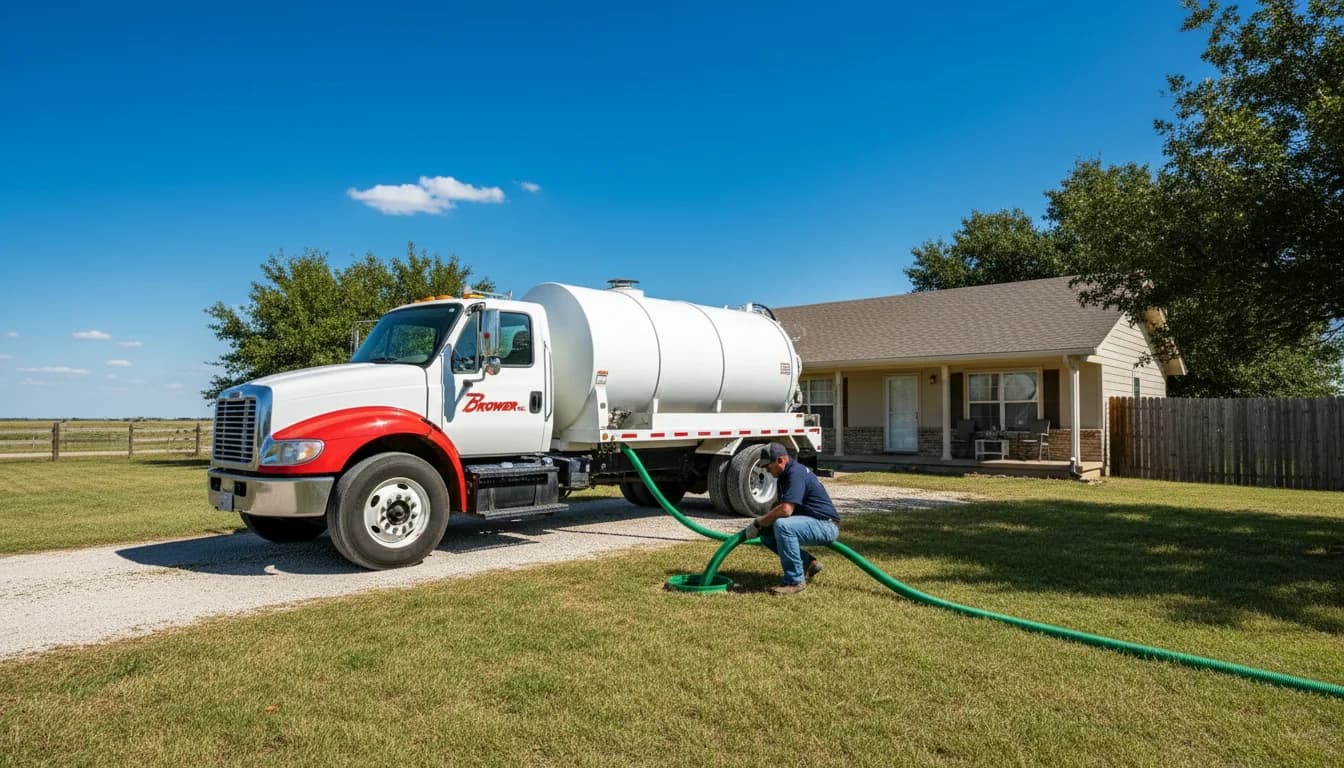
An Oklahoma homeowner near Tonkawa called us last month with three quotes for a routine septic pump-out on a standard 1,000-gallon tank: $275, $450, and $890.Same tank. Same driveway. Same job. The cheapest quote and the most expensive quote were separated by more than 3× — and one of them was from a national chain dispatching out of state.
That kind of spread is not random. Septic pumping in Oklahoma has a real, defensible market price, and the quotes that fall outside it are doing something specific — usually unbundling fees that should be built into the rate, or charging a long-haul premium. This guide gives you the actual 2026 numbers, the seven things that move them, and the questions to ask before you let a truck onto your property.
Quick Answer
In 2026, a standard residential septic pump-out in Oklahoma costs $275–$525 all-in for most 1,000–1,500- gallon tanks. Smaller 750-gallon tanks come in near the low end; larger 2,000+ gallon tanks, aerobic systems, multi-tank commercial properties, hard-to-reach lids, and after-hours emergencies push the price higher. The single rule: get an all-in flat quote in writing — pump, rinse, inspection, and DEQ-compliant disposal — before the truck arrives.
Want a flat-rate septic pumping quote for your Oklahoma property?
Tell us your address and (if you know it) tank size. Brower Inc. quotes flat — pump, rinse, inspection, and disposal in one number — usually within the hour. No mileage surcharge for addresses inside our 20-county service area.
See Septic Pumping Service →Septic Pumping Cost by Tank Size (Oklahoma, 2026)
Tank size is the single biggest driver of price. A larger tank means more waste, more disposal weight, and more time on site. These are the typical all-in flat rates across our north-central Oklahoma service area for a routine, scheduled pump:
| Tank Size | Typical Household | 2026 Flat Rate (OK) |
|---|---|---|
| 750 gallons | 1–2 people | $275–$375 |
| 1,000 gallons | 3–4 people | $325–$425 |
| 1,250 gallons | 4–5 people | $375–$475 |
| 1,500 gallons | 5–6 people | $425–$525 |
| 2,000+ gallons | Large/multi-family | $525–$725 |
| Aerobic system | Mound/spray system | $400–$650 |
| Restaurant grease trap | Commercial kitchen | $300–$800 by size |
These are flat all-in rates — pump, rinse, inspection, DEQ disposal. Mileage inside our service area is included. If you don't know your tank size, the property's septic installation permit on file with the Oklahoma DEQ Onsite Sewage Treatment Systems office will list it.
7 Factors That Change Your Final Septic Pumping Price
Two homeowners with the same tank size on the same street can get different invoices for legitimate reasons. These are the seven that actually matter:
- Tank size and depth. The bigger and deeper the tank, the more time, hose, and disposal weight per visit.
- How long since the last pump. A tank pumped yearly is mostly liquid. A tank pumped after 12 years is dense, hardened solids that take longer to break up and remove. We wrote about this exact scenario in our Oklahoma septic maintenance guide.
- Lid accessibility. A surface-level riser is fastest. A buried lid under sod, decking, or driveway gravel adds 20–45 minutes of digging.
- Number of compartments / tanks. Most modern Oklahoma tanks are two-compartment; both have to be pumped or solids cross over and the job is half-done.
- System type. Aerobic systems with spray heads and timer panels require more inspection time than a passive conventional tank.
- Distance from the pumper's base. Pumpers routed in from another county or state pass the mileage along. A locally-based pumper does not.
- Scheduling type. A scheduled, planned pump is cheaper than a same-day or after-hours emergency overflow callout. Always.
Skip the $890 quote shock.
Brower Inc. is DEQ-licensed, headquartered in Newkirk, and runs daily routes across 14 Oklahoma and 6 Kansas counties. Flat pricing, no mileage surcharge inside the service area, same truck and crew that's been doing this since 1980.
Call (580) 747-6206Hidden Fees: Why Two Quotes Can Vary by $600
The $275-vs-$890 spread we opened with is almost always the same four line items the lower quote didn't name. Watch for these when you compare:
- "Environmental disposal fee" or "dump fee" ($75–$150). The pumper has to pay the DEQ-permitted treatment facility to receive the waste. That cost should be inside the flat rate, not a line item.
- Mileage / fuel surcharge ($45–$200). Anything over $25 means the truck is routed in from out of area.
- Lid uncovering / digging fee ($50–$150). Often disclosed only after the truck arrives. Ask in advance whether this is included for a buried lid.
- Inspection or "tank certification" fee ($75–$150). For routine pumps, a visual inspection of the tank walls and baffles should be part of the service — not an upcharge.
The fix is one sentence on the phone: "What is the all-in flat price, including disposal, mileage, lid access, and inspection?" The provider who can answer in one number is the one you book.
Septic Pumping Cost by County in Our Service Area
Because we run daily routes from Newkirk, the cost to pump a standard residential tank does notmeaningfully change from county to county inside our 20-county service area. The same flat rate applies whether you're in Ponca City, Enid, Stillwater, Guthrie, or across the Kansas border in Arkansas City or Winfield. The difference comes from the pumpers who don't route to those areas every day:
- Kay County (Newkirk, Ponca City, Blackwell, Tonkawa) — home base. Same-week scheduling, no surcharge.
- Garfield, Noble, Kingfisher, Logan, Pawnee, Osage, Payne, Grant, Major, Alfalfa, Woods, Woodward Counties — daily route territory. Same flat rate.
- Southern Kansas (Sumner, Cowley, Harper, Barber, Kingman, Sedgwick Counties) — regular cross-border route. Same flat rate.
- Outside our 20-county area — we can quote, but expect a higher mileage component honestly priced into the rate.
How Often to Pump (and Why It Saves Money Long-Term)
The EPA SepticSmart program and the Oklahoma DEQ both recommend pumping every 3 to 5 years for most residential systems. The exact interval inside that window depends on:
- Household size — more people = more solids.
- Tank size — smaller tanks fill faster.
- Water usage — long showers, dishwashers running daily, and heavy laundry shorten the cycle.
- Garbage disposal use — disposals add solids fast; pump on the 3-year end if you use one daily.
- Soil conditions over the drain field— Oklahoma's heavy clay soils slow leach-out and shorten the drain field's effective life.
Skipping pumps to save the $400 today is the most expensive thing you can do. A full tank starts pushing solids into the drain field — and a failed drain field replacement runs $5,000 to $20,000+ in Oklahoma. The pump pays for itself many times over.
"The customers who call us in a panic are almost never the ones who skipped one pump. They're the ones who skipped three or four. By the time it backs up into the house, the drain field is gone, and they're looking at twenty grand instead of four hundred bucks."
— Troy Brower, Owner | Brower Inc. | Newkirk, OK
6 Signs You Need a Pump Right Now
Any one of these means a tank that is at or past capacity. Two or more at the same time means call today.
- Slow drains everywhere in the house — not just one fixture. A single slow drain is a clog; all of them slow at once is the septic.
- Gurgling sounds in toilets or pipeswhen water drains elsewhere. Air is being forced back up because there's no room in the tank.
- Sewage odor near the tank or drain field.
- The grass over the drain field is unusually green, wet, or spongy — fertilizer from a failing field. We cover this one in detail in the maintenance guide.
- Sewage backing up into the lowest drain in the house (basement floor drain, ground-floor toilet, laundry drain).
- Aerobic system alarm panel light or audible alarm. The alarm exists for one reason.
Emergency vs. Scheduled Pump Cost
The cheapest pump is the one you book a week ahead on a route the truck is already running. The most expensive is the 9 PM Sunday emergency callout for a sewage backup. The math is roughly:
| Service Type | Typical Premium |
|---|---|
| Scheduled, business hours | Base flat rate |
| Same-day, business hours | +$50–$100 |
| After-hours / weekend | +$100–$200 |
| Holiday emergency | +$200–$300 |
Cost of Pumping vs. Cost of Skipping It
The real cost comparison is not pump-A vs. pump-B. It's pump now vs. don't.
| Scenario | Typical 2026 Oklahoma Cost |
|---|---|
| Scheduled pump every 3–5 years | $275–$525 |
| Emergency pump after backup | $475–$825 |
| Drain field repair after partial failure | $1,500–$5,000 |
| Full drain field replacement | $5,000–$20,000+ |
| Indoor sewage backup cleanup & restoration | $2,000–$10,000+ |
One scheduled pump every 4 years is $400. Replacing a drain field once is the equivalent of 50 years of scheduled pumps. The maintenance schedule is the cheap path; the "I'll get to it later" path is not.
How Brower Inc. Quotes a Septic Pump
Straight, repeatable, no surprise on the invoice. Here is what the call looks like:
- You tell us the address, tank size (if known), and last pump date.
- We quote a flat all-in price — pump, rinse, inspection, DEQ-compliant disposal — over the phone.
- We confirm a scheduled date and a 2-hour arrival window, in writing.
- We arrive with the right-sized vacuum truck — no second visit because the wrong rig was dispatched.
- We pump every gallon, rinse the tank, inspect the baffles and walls, and log a recommended next pump date.
- The invoice matches the quote. The whole point.
For the ongoing-care side of the system, pair this with the Oklahoma homeowner's septic maintenance guide — it covers what happens between pumps, the warning signs above in more detail, and the DEQ rules that apply to your system.
Get a flat-rate Oklahoma septic pumping quote — usually within the hour.
Tell us your address, tank size if you know it, and approximately when it was last pumped. We'll quote pump + rinse + inspection + DEQ disposal in one number, schedule a 2-hour window, and stand behind the price. Call (580) 747-6206 or send us the details.
Frequently Asked Questions
A standard residential septic pump-out in north-central Oklahoma runs $275 to $525 in 2026 for a typical 1,000–1,500-gallon tank, all-in. Smaller 750-gallon tanks fall closer to the low end; larger 2,000+ gallon tanks, multi-tank systems, hard-to-reach lids, and emergency overflow callouts push the price higher. Brower Inc. quotes flat all-in pricing — pump, rinse, inspection, and waste disposal in one number — across 14 Oklahoma and 6 Kansas counties.
The Pump Is Cheap. The Avoidance Is Not.
Septic tank pumping in Oklahoma in 2026 is a $275–$525 line item on a four-year schedule. Done. The expensive things are the quotes with hidden fees, the long-haul mileage from out-of-state pumpers, and the years you skip until a drain field replacement shows up on the invoice instead.
Brower Inc. is locally owned in Newkirk, fully DEQ-licensed, and runs daily septic routes across 14 Oklahoma and 6 Kansas counties. Flat pricing, no mileage surcharge, no "environmental fee" on top, and a real person on the phone day or night. Call (580) 747-6206 or request a flat-rate septic quote.
Related reading
Related guides
Our services
Service areas