
We're Hosting 80 People at the Farm — Can the Septic Actually Take It?
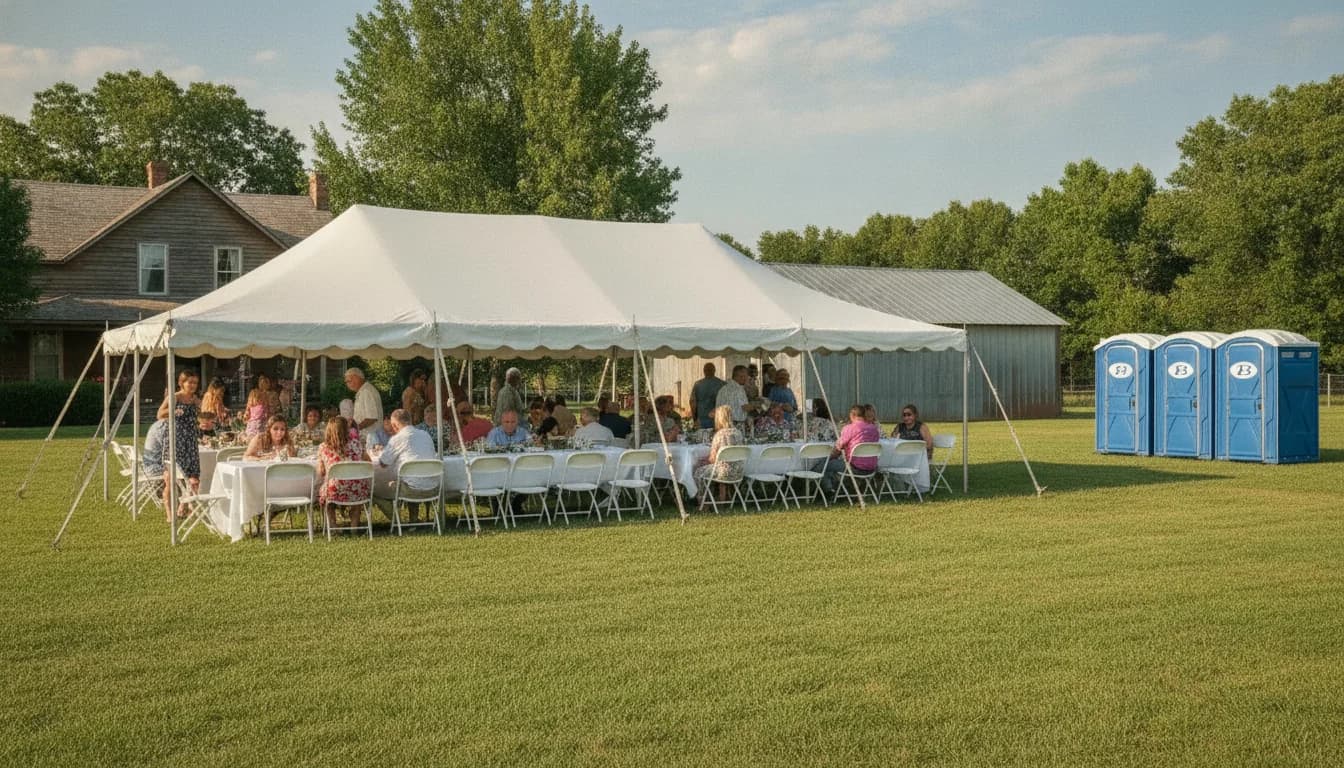
The date is set, the tent is rented, and somewhere around week three of planning a thought arrives that you can't quite put down: everybody is going to be using one bathroom, and that bathroom runs to a septic tank buried out in the yard that nobody has thought about in years.
It's a reasonable thing to worry about, and the honest answer is more nuanced than either "you'll be fine" or "you're about to have a disaster." Most systems survive a party. The ones that don't were usually already close to the line, and the failure rarely looks like the tank overflowing — it looks like a drain field that quietly stops working a few weeks later. Here's the actual math, the real damage mechanism, and what to do in the two weeks before your guests arrive.
Quick Answer
Oklahoma requires a minimum 1,000-gallon tank for a home with four or fewer bedrooms — sized for a household of about four to five people, not eighty in an afternoon. The danger isn't the tank filling up; it's surge flow. A septic tank needs roughly 24 hours for solids to settle, and party traffic collapses that window, stirring sludge and pushing solids into the drain field — the part that costs $5,000 to $20,000 to replace. The two fixes that work: pump and inspect beforehand, and rent portable restrooms so the load never reaches the tank at all.
Event coming up on a rural property?
Brower Inc. does both sides of this — DEQ-licensed septic pumping and clean portable restrooms — so one local call covers protecting the system and handling the guests.
See Septic Services →What 80 Guests Actually Put Into the System
Start with what your tank was built for. Under Oklahoma's on-site sewage rules (OAC 252:641-7-4), a residence with four or fewer bedrooms requires a tank of at least 1,000 gallons, with another 250 gallons for each additional bedroom. That 1,000-gallon minimum is engineered around a household of roughly four to five residents using water the way households do — spread across a day, with long quiet stretches overnight.
Now put a party on it. The EPA figures average indoor water use at up to 70 gallons per person per day, but a guest at an afternoon event isn't showering or running laundry — so the realistic number is far lower, in the range of a few gallons each once you account for flushes and handwashing. Even being conservative:
- 80 guests × ~5 gallons ≈ 400 gallons— roughly 40% of a minimum-size tank's entire volume.
- Compressed into three or four hours, rather than spread across a day like normal household use.
- On top of whatever your household is already putting in that same day — and if guests are staying over, the next morning is worse.
You'll see much scarier figures floating around — some sources claim 200 guests generate over 2,200 gallons. We'd treat that as a high-end estimate rather than a rule; it depends heavily on event length and whether people are eating, drinking, and staying for hours. The point isn't the exact gallon count. It's that a system sized for five people is being asked to absorb something on the order of a day's household flow in an afternoon.
Surge, Not Volume, Is What Actually Damages the System
This is the part most homeowners have backwards, and it changes what you should be worried about. A septic tank isn't just a holding container — it's a settling chamber. Solids sink into a sludge layer at the bottom, grease floats to the top, and relatively clear liquid in the middle is what's supposed to flow out to the drain field. That separation takes time. Michigan State University Extension puts the settling window at roughly 24 hours, and notes that a day of party water use reduces or eliminates it.
When water comes in faster than solids can settle, two things happen at once: the incoming flow stirs up the sludge layer that has been sitting quietly for years, and it pushes that disturbed material out the outletand into the drain field. The drain field is soil engineered to absorb liquid — it is emphatically not designed to receive solids. Once solids clog those soil pores, absorption capacity drops and doesn't come back on its own.
That's why the failure so often shows up weeks afterthe event, not during it. The party goes fine. Then in September the grass over the field is suspiciously lush, there's a soft spot that never dries, and the drains are slow. The cost gap between the two outcomes is brutal:
| Outcome | Typical cost |
|---|---|
| Routine pump & inspection beforehand | A few hundred dollars |
| Drain field replacement, average soil | $3,000 – $8,000 |
| Drain field replacement, heavy clay or high water table | $15,000 – $20,000 |
That clay figure is not a footnote in this part of Oklahoma. Soil type drives drain field sizing dramatically — one homeowner on a rural-living forum described how his 20-by-20-foot field in good draining ground would have needed to be 60 by 40 feet in clay, six times the area for the same house.
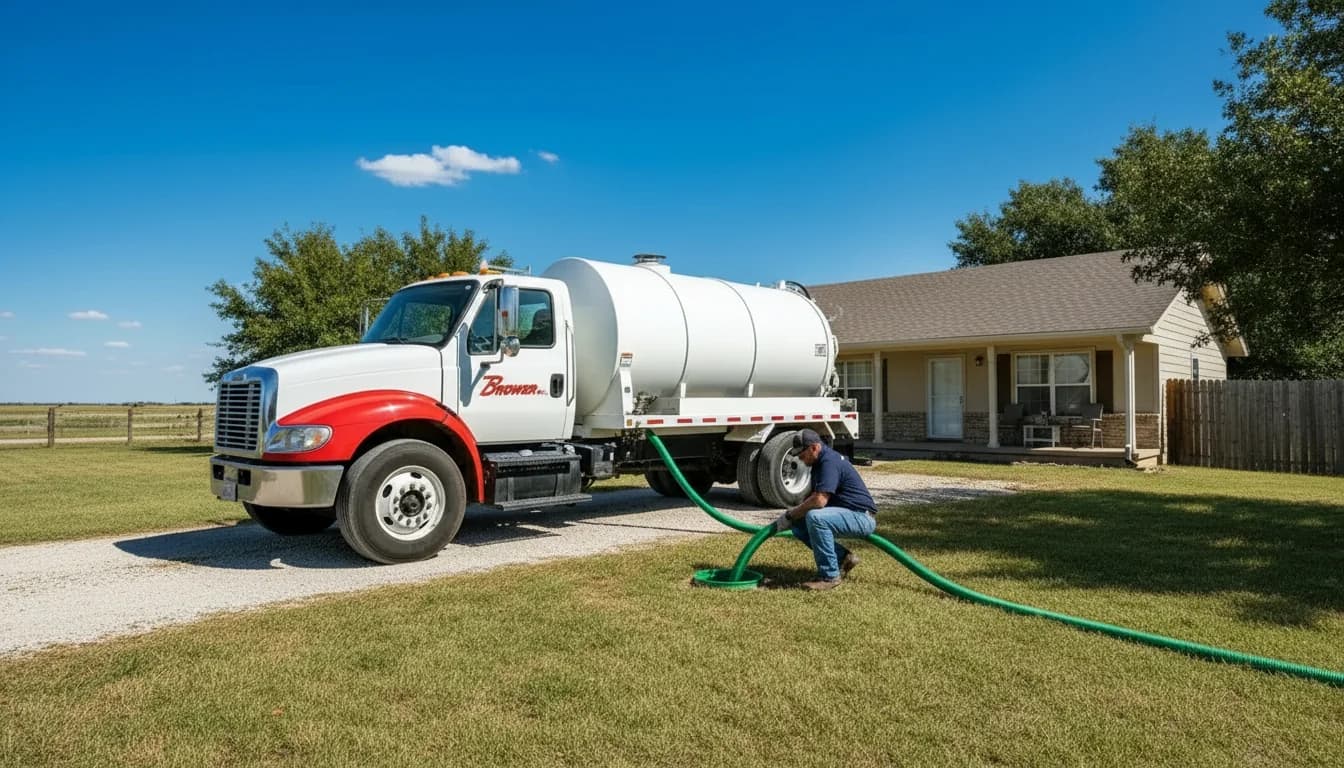
Is Your System Already Near the Line?
A healthy system with recent maintenance handles a gathering far better than one that's been quietly deteriorating. Before you plan around it, check whether any of these are true:
- You don't know when it was last pumped.If the answer is "the previous owners handled that," assume it's overdue. Our guide on tanks that haven't been pumped in years covers where you actually stand.
- Drains are already a little slow, or a toilet gurgles. That's the system telling you it has no spare capacity — see the warning signs worth acting on.
- There's a green stripe or soft groundover the drain field. Grass that's noticeably lusher over the field can mean effluent is surfacing rather than absorbing.
- The ground is already saturated. Worth noting this year: Oklahoma came off one of its wettest Junes on record statewide, and a drain field working through already-wet soil has less absorption capacity in reserve than the same field in a dry season.
- It's an older system on clay. Common across Kay County and the surrounding area, and the least forgiving combination for a surge.
Any one of those means get it looked at before the event rather than after. Finding a failing baffle in July is a service call; finding it during a graduation party is a very different day.
Event in the next few weeks and an unknown tank?
Get it pumped and inspected while it's still routine. Brower Inc. is DEQ-licensed and covers 14 Oklahoma and 6 Kansas counties — and we can bring restrooms for the day too.
Call (580) 747-6206What to Do in the Two Weeks Before
A short, practical list — roughly in order of how much difference each one makes:
- Rent portable restrooms.This is the highest- impact step because it removes the load entirely instead of trying to survive it. Michigan State University Extension explicitly lists renting a portable restroom among its recommendations for protecting a septic system during large gatherings — that's a land-grant university, not a rental company, saying it.
- Pump and inspect the tank a few days to two weeks out.Not the morning of — you want the inspection findings early enough to act on them. MSU Extension recommends arranging inspection and pumping ahead of the party, especially if it hasn't been done recently.
- Spread out household water use. Run laundry and dishwashers in the days before, not the day of. Every load you move off the event day is capacity you get back.
- Put a small sign in the bathroom.Nothing but toilet paper down the toilet — no wipes, no paper towels, no feminine products. Guests don't know your house is on septic unless you tell them.
- Know where the tank and field are, and keep cars, the tent, and the dance floor off the drain field. Driving or parking on it compacts the soil and damages the lines.
- Watch for trouble during the event. A slow flush or a gurgle mid-party is your cue to move everyone to the rented units immediately, before it becomes a backup.
How Many Restrooms Should You Actually Rent?
We'll give you a working number and then be straight about how much the published guidance varies. A widely used planning starting point:
- One unit per 50 guests for a three- to four-hour event.
- Add roughly 15–25%if you're serving alcohol.
- Add about one unit per hour beyond four hours.
- At least one ADA-accessible unit, which is also simply the easiest unit for older guests and anyone in formal clothes.
- A hand washing station — roughly one per four restrooms.
For an 80- to 100-guest afternoon with drinks, that lands at two to three units plus a hand washing station. Now the honesty part: ratio guidance genuinely conflicts between sources. Some wedding planners recommend as tight as one stall per 25 guests; festival operators run closer to one per 50 for all-day events; and the frequently quoted industry-association figure of one per 100 is difficult to verify at its source because the standard is paywalled. Anyone giving you a single confident number is oversimplifying. Tell us guest count, hours, and whether there's alcohol, and we'll size it with you.
If the event is a wedding rather than a family gathering, our guide for venues with too few bathrooms covers the guest-experience side, and the comparison of standard units versus a restroom trailer is worth reading before you decide.
"We get the same call every summer — somebody's got a reunion or a graduation coming up and they're nervous about the septic. Pumping it beforehand and putting a couple of units out back is a few hundred dollars. Digging up a drain field in the fall because the tank got churned is a different number entirely. It's not a close call."
— Troy Brower, Owner | Brower Inc. | Newkirk, OK
How Brower Inc. Helps With Both Halves
Most companies do one side of this. We do both, which is why a single call handles the whole problem:
- DEQ-licensed septic pumping and inspection scheduled ahead of your event, with an honest read on whether the system is in shape for it.
- Clean portable restrooms delivered and placed where they're convenient but not the centerpiece — including ADA units.
- Stocked hand washing stations — worth having anywhere food is being served.
- Rural delivery that actually happens. Gravel roads and farm addresses are normal work for us, not an excuse to cancel two days out.
- A written, all-in quote and a real local number answered by a person — no surprise surcharges after the fact.
One more thing worth knowing as an Oklahoma homeowner: septic is regulated statewide by Oklahoma DEQunder OAC 252:641, not by your county health department — which catches people out, since Kansas does delegate it to counties. If you're also weighing longer-term system questions, our Oklahoma septic maintenance guide covers the ongoing schedule.
Protect the septic before the guests arrive.
Tell us your event date, guest count, and where you are, and we'll get the tank pumped ahead of time and put the right number of restrooms on site. Call (580) 747-6206 or request a quote.
Frequently Asked Questions
It depends far less on the number of guests than on how concentrated the use is. Oklahoma's rules require a minimum 1,000-gallon tank for a home with four or fewer bedrooms, and a tank that size is designed around a household of roughly four to five people — not eighty in an afternoon. Even at a conservative five gallons of use per guest, 80 people put around 400 gallons through the system in a few hours. The tank may not overflow, but that surge is what causes problems, because it pushes water through faster than solids can settle out. Many systems survive a party fine; the ones that don't tend to be systems that were already near their limit.
The Party Isn't the Problem. The Surge Is.
Your septic system isn't fragile — it's specialized. It does one job well, which is separating solids from liquid slowly, and a large gathering is the one condition that takes away the time it needs to do it. Pump it beforehand so it starts with full capacity, rent enough restrooms that most of the load never arrives, and keep vehicles off the drain field. Do those three things and the system will almost certainly be fine.
Brower Inc. is locally owned in Newkirk and handles both septic service and portable restrooms across 14 Oklahoma and 6 Kansas counties. Call (580) 747-6206 or request a quote for your event.
Related reading
Related guides
Service areas