
My Septic Tank Hasn't Been Pumped in 12 Years — Am I Already in Trouble?
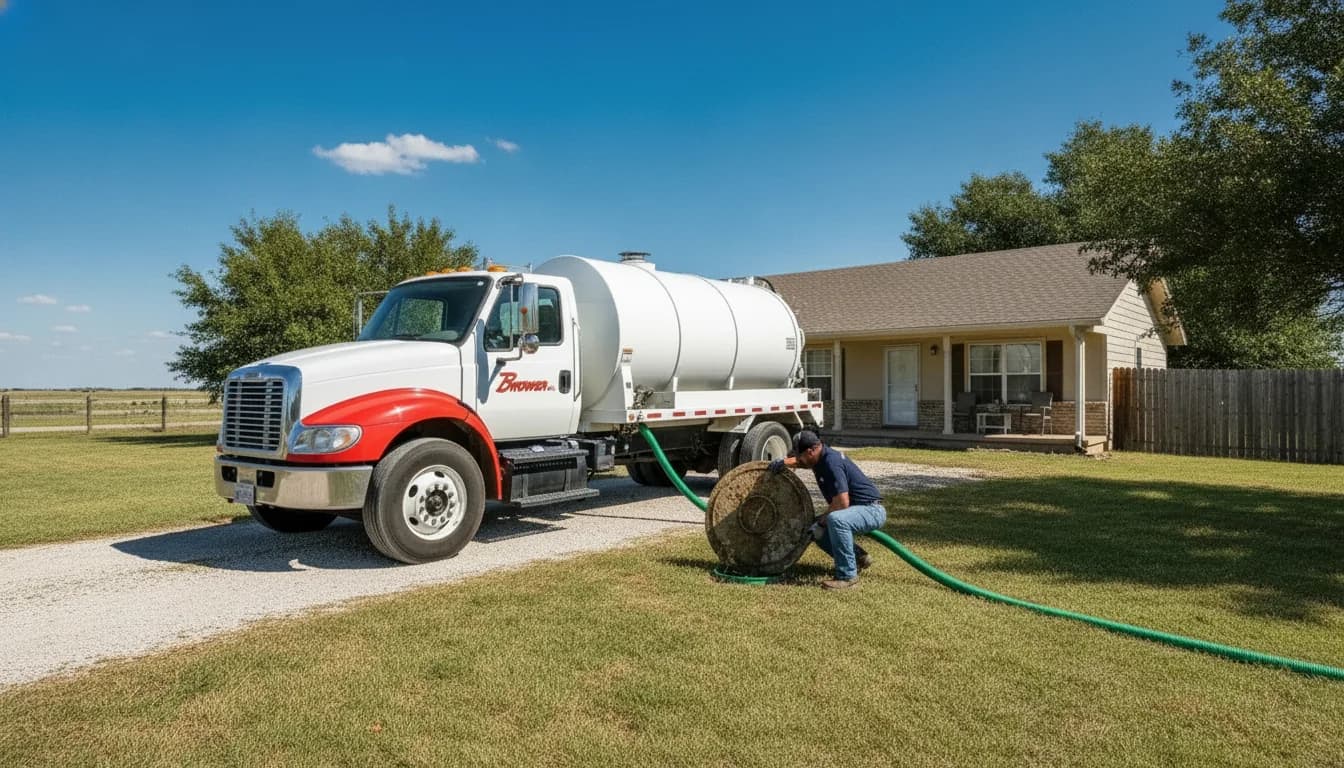
Maybe you just bought the place and the previous owner "thinks it was done a while back." Maybe you've lived there for years, everything drains fine, and it hit you at 11pm that you have genuinely never had the tank pumped. Either way you're here typing some version of the same anxious question: "It's been over a decade — did I already wreck it?"
Here's the straight answer, from a DEQ-licensed pumper who opens neglected tanks across north-central Oklahoma every week: going years without pumping does notautomatically mean the system is ruined — but it does mean you're rolling dice you can stop rolling today. This post explains what's actually happening down there, how to tell which situation you're in, and why a septic tank pumping right now is the cheapest insurance you'll ever buy.
Quick Answer
A tank that's gone 12 years is badly overdue but not automatically damaged. One of two things is true: it's simply full and fine after a pump, or solids have already reached the drain field and started clogging it — and you can't tell which from the surface. The fix is the same either way: get it pumped and inspected now. If the field's healthy, you caught it. If it's struggling, catching it today still beats a $15,000 replacement later.
Not sure how bad it is? That's exactly what an inspection answers.
Brower Inc. is a DEQ-licensed pumper in Newkirk. We pump, rinse, and read the tank in one visit — flat all-in pricing, no mileage surcharge inside our 20-county service area.
See Septic Pumping →First, Take a Breath — 12 Years Isn't Automatically a Disaster
The panic usually comes from a half-remembered rule ("pump every three years or else") colliding with the realization that you blew past it years ago. So let's reset the fear: the 3–5 year schedule is a maintenance target designed to keep you comfortably ahead of trouble, not a doomsday clock where the tank self-destructs at year six.
Plenty of tanks that went a decade between pumps come back to full health after one service, because they were never overloaded enough to push solids into the field. Others that went the same twelve years are already in trouble — a big household, a garbage disposal running daily, an undersized tank. The number of years is a warning flag, not a verdict. What matters is what the solids have been doing the whole time.
What's Actually Happening in There
A septic tank does something quietly clever: solids sink to the bottom as sludge, grease and lighter matter float on top as scum, and the relatively clear water in the middle flows out to the drain field to soak safely into the soil. Pumping exists to remove that bottom sludge and top scum before they build up too far.
Skip pumping long enough and the sludge layer keeps rising until there's no settling room left. Now solids get carried out with the water and into the drain field, where they clog the soil's ability to absorb. That's the whole ballgame. The tank is cheap to empty; the field is expensive to replace. Every extra year without pumping is another year the sludge line creeps toward the outlet. As the EPA's septic guidance puts it, routine pumping is the single cheapest thing you can do to keep the entire system alive.
The "My Neighbor Never Pumped in 40 Years" Myth
Every rural county has this legend, and it's the single most expensive piece of advice in septic ownership. Someone always knows a place that "never got pumped and never had a problem." Two things are going on. First, it's survivorship bias — you hear about the tank that beat the odds, never about the three neighbors who quietly wrote a $12,000–$18,000 check for a new drain field and didn't brag about it at the co-op.
Second, and more important here: soil is destiny. A tank in loose sandy ground has a very forgiving drain field. A tank in the dense red claythat covers much of Kay, Garfield, Noble, and Logan counties does not. Same neglect, very different outcome. Betting your field on a story about someone else's dirt is how the "I never had a problem" homeowner becomes the "I can't believe it was $15,000" homeowner.
Been more than five years — or you honestly don't know?
That's reason enough to pump and get eyes on the tank. Brower Inc. runs daily septic routes across 14 Oklahoma and 6 Kansas counties, and we'll tell you straight whether it's a simple pump or something more.
Call (580) 747-6206How to Tell Which Situation You're In (Today)
You can't confirm the field's condition without opening the tank, but your house and yard will tell you how urgent it is right now. Walk through this quick read:
- Multiple slow drains at once — kitchen, tub, and laundry all sluggish together points at the tank, not a single clog.
- Gurgling toiletswhen you run water elsewhere — air being forced back because waste can't leave fast enough.
- A greener or soggy strip of grassover the drain field with no recent rain — effluent surfacing because the tank is overfull. (The sign people wrongly read as "good.")
- Sewage odor near the tank lids, the field, or indoors.
- Any backup into the lowest drains — the late, do-not-wait sign.
Zero symptoms is good news but not a green light — it usually means you've caught it in the overdue-but-okay window, which is exactly when a pump is cheapest and most effective. Any symptoms and you're into "call promptly" territory. We break each of these down in the 5 warning signs your septic tank needs pumping.
The $400 vs. $20,000 Math
This is why a long-overdue tank is worth acting on the day you think of it. The gap between catching it early and catching it late isn't 20% — it's two orders of magnitude:
| What you're paying for | When | Typical cost |
|---|---|---|
| Overdue tank pump-out + inspection | Before the field is damaged | $300–$650 |
| Emergency pump after a backup | Once it surfaces or backs up | $450–$900+ |
| Drain field repair / partial replacement | After the field clogs | $3,000–$15,000 |
| Full system replacement | After total failure | $10,000–$25,000+ |
A pump on an overdue tank is a few hundred dollars and an hour. The only way that number ever becomes a five-figure one is by waiting until the field is already gone. For the full breakdown of what moves the price, see our Oklahoma septic tank pumping cost guide.
Why Oklahoma Clay Raises the Stakes
If your place sits on rural ground in Kay County or anywhere across north-central Oklahoma, your drain field is probably working in dense red clay that drains slowly to begin with. A neglected tank that starts pushing solids into a clay-bound field clogs it faster and lets it recover slower than the same mistake would in sandy soil. That's a big reason so many local homes run aerobic systems with spray dispersal instead of a conventional buried field.
There's a regulatory angle too. Septic systems in Oklahoma are overseen by the DEQ — the state, not your county — and the rules require that effluent never "surface, pool, or flow across the ground."A badly overdue tank that surfaces sewage in the yard isn't just a mess; it can become a compliance problem on top of a repair bill. Pumping on schedule keeps you clear of both.
What to Actually Do First
- Stop stress-Googling and schedule a pump-out. It's the same first step whether the tank is fine or failing, so there's nothing to decide.
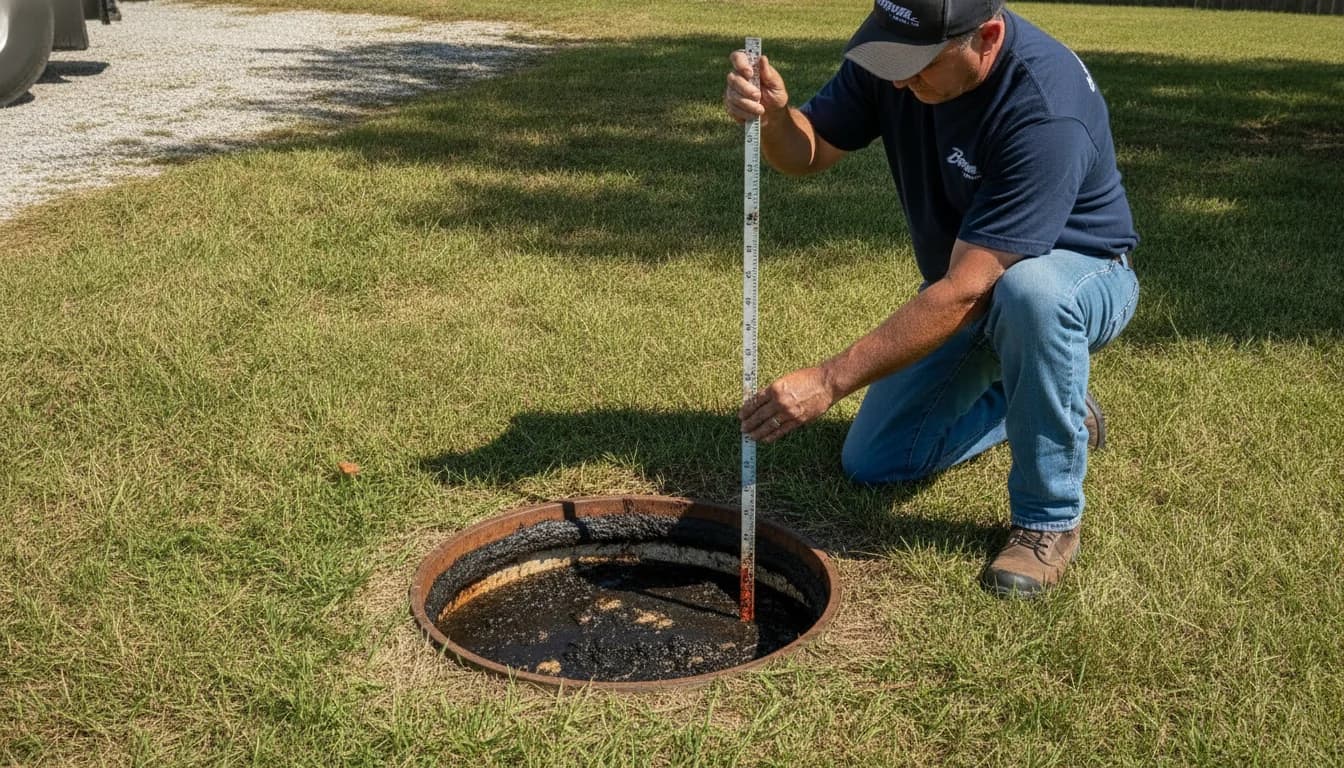
- Ask for an inspection with the pump.A good pumper reads the sludge depth, checks the baffles, and looks at whether the outlet is passing clean — that's how you learn the field's real condition.
- Ease off the water until it's doneif you're seeing any symptoms — skip the extra laundry loads and long showers so you're not adding to a full tank.
- Get a next-pump date in writing. Once you know the sludge level, you can schedule on data instead of guessing for another decade.
If you just bought the property, this doubles as your baseline: for the whole homeowner routine — what to flush, what to never flush, and seasonal care — pair this with our Oklahoma septic system maintenance guide.
"People are scared to call because they think I'm going to tell them they ruined a twelve-year-old tank. Most of the time I don't — we pump it, I check the field, and they're fine. The ones who wait another two years hoping it sorts itself out are the ones I end up quoting a new drain field. Calling early is almost never the expensive mistake."
— Troy Brower, Owner | Brower Inc. | Newkirk, OK
How Brower Inc. Helps
We've been pumping and servicing septic systems across northern Oklahoma since 1980 — including plenty of tanks nobody had touched in a decade or two. When you call us about an overdue system, here's what you get:
- A DEQ-licensed pumper— not a general hauler — who can tell whether it's a simple pump or the field's in trouble.
- Pump, rinse, and inspection in one visit, so you get a real read on the sludge level, baffles, and outlet.
- Flat all-in pricing quoted before we come out — pump, rinse, and DEQ-compliant disposal in one number.
- No mileage surcharge inside our 14 Oklahoma and 6 Kansas counties — rural addresses included.
- A recommended next-pump date in writing, so you're never guessing again.
Buying or selling a place with an unknown septic history? A septic inspection tells you exactly what condition the system is in before you sign — far cheaper than inheriting someone else's neglect.
Overdue tank? Get it pumped and inspected before it's a drain field.
Tell us your address and we'll quote pump + inspection + DEQ disposal in one flat number — no mileage surcharge inside our 20-county service area. Call (580) 747-6206 or send the details and we'll get you on the schedule.
Frequently Asked Questions
Not necessarily. A tank that's gone 12 years may simply be overdue and fine after a pump — or the solids may already have reached the drain field and started clogging it. You can't know which from the surface, and neither can anyone else without looking. The right move is a pump-out with an inspection of the sludge level, baffles, and outlet: if the field is still healthy, you've caught it in time; if it's struggling, catching it now is still far cheaper than waiting for it to fail completely.
The Cheapest Day to Pump Was Years Ago. The Second Cheapest Is Today.
Twelve years without a pump is a reason to call, not a reason to despair. The vast majority of overdue tanks are still saveable — but only for as long as the drain field holds, and nobody can tell you how long that is without looking. The homeowners who keep their systems running for decades aren't the ones who never made a mistake; they're the ones who fixed it the moment they realized.
Brower Inc. is locally owned in Newkirk, fully DEQ-licensed, and pumps and services septic systems across 14 Oklahoma and 6 Kansas counties — flat pricing, no surprise fees, and a real person on the phone. Call (580) 747-6206 or request a septic service quote.
Related reading
Related guides
Our services
Service areas