
5 Warning Signs Your Septic Tank Needs Pumping (Don't Ignore #3)
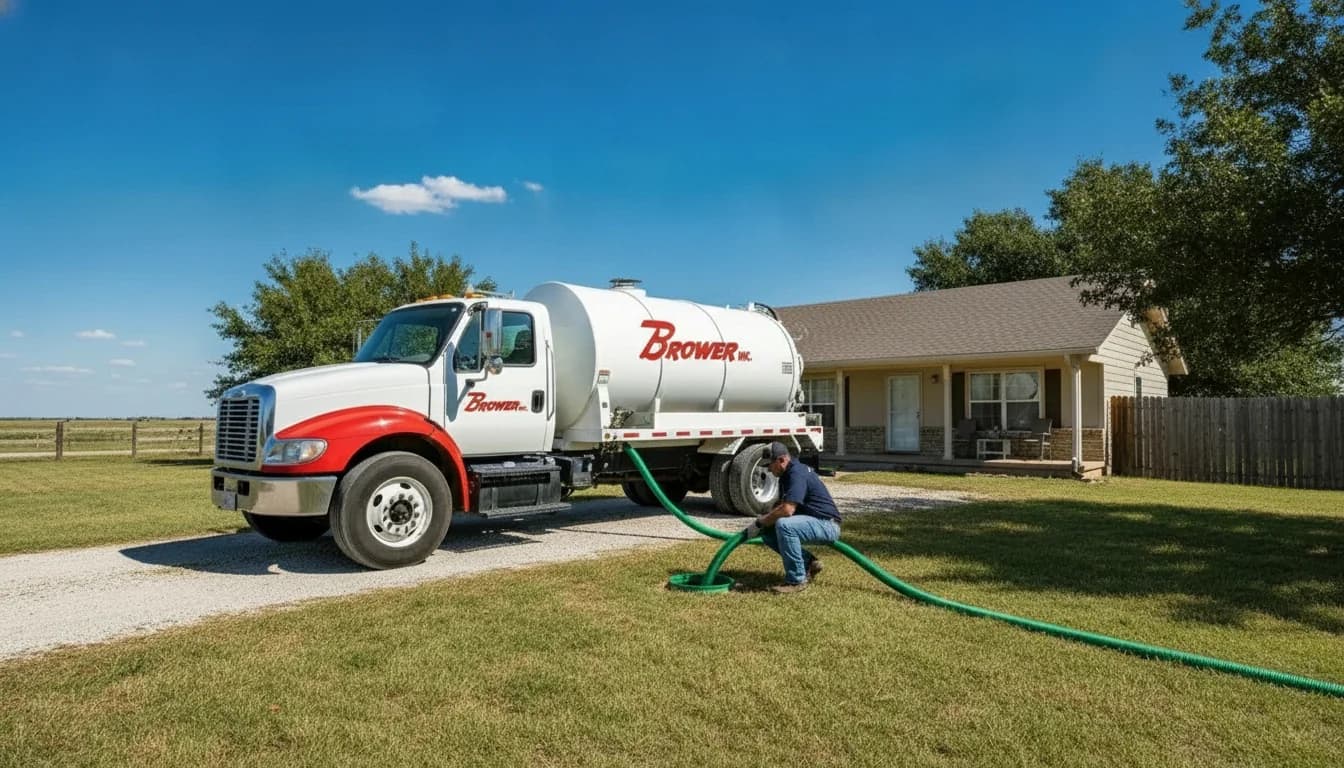
Here's the thing about a septic tank: it's buried in the yard, it never asks for anything, and for years it does its job so quietly you forget it's there. Which is exactly why the first real symptom tends to land with a jolt of dread — a slow drain, a gurgle, a smell — and the question almost every homeowner Googles at that moment is the same: "Is this the cheap problem, or the expensive one?"
Good news: the difference between a $400 pump-out and a $15,000 drain field replacement usually comes down to whether you act on the early signs or wait for the late ones. Below are the five warnings your tank gives you, in roughly the order they show up — what each one actually means, how urgent it is, and the one everybody misreads as goodnews (it's #3). If you're due for a septic tank pumping in north-central Oklahoma, this is how to read your own system.
Quick Answer
Your septic tank needs pumping when you notice slow drains throughout the house, gurgling pipes, grass over the drain field that's suddenly greener or soggy, sewage odor, or backups. The earlier signs (slow drains, gurgling) mean schedule a pump soon; the later ones (soggy field, odor, backups) mean call now. And if you simply can't remember the last time it was pumped, it's due — most Oklahoma tanks need it every 3–5 years.
Seeing one of these signs right now?
Brower Inc. is a DEQ-licensed pumper based in Newkirk. We empty, rinse, and inspect your tank in one visit — flat all-in pricing, no mileage surcharge inside our 20-county service area.
See Septic Pumping →Why These Signs Matter (the part nobody explains)
A septic tank works by letting solids settle to the bottom as sludge and grease float to the top as scum, while the relatively clear water in the middle flows out to the drain field to soak into the soil. Pumping removes that built-up sludge and scum. When you skip it too long, the solids rise high enough to wash out with the water and clog the drain field — and a clogged field is the expensive part. The tank you can pump; the field you often have to dig up and replace.
So every sign below is really your system warning you that solids are getting too high beforethey reach the field. That's the whole game: pump on the warnings, protect the field, and a septic system will run for decades. As the EPA's septic care guidance puts it, routine pumping is the single cheapest thing you can do to keep the whole system alive.
1. Every Drain in the House Is Suddenly Slow
One slow sink is a clog. Multipleslow drains — the kitchen sink, the tub, the washing machine all draining sluggishly around the same time — point past the pipes to the tank itself. When the tank is near capacity, there's simply less room for water to move through, so everything backs up a beat.
This is the friendliest warning you'll get, because nothing has overflowed yet. Homeowners constantly talk themselves out of it — "it's draining, just slow, it's probably fine" — and that hesitation is exactly how a $400 pump becomes a $4,000 emergency. Urgency: schedule within a week or two.
2. Gurgling Toilets and Pipes
Run the washing machine or a couple of showers and hear the toilet bubble and glug? That gurgle is air being pushed back up the drains because wastewater can't leave the house fast enough — the tank is full or the inlet is partly blocked. People describe it exactly this way: "every time I do laundry the toilets gurgle."
It's a clear step up from slow drains. The system is now actively struggling to move water out. Urgency: schedule within days.If you're also catching whiffs of sewage (sign #4), don't wait the weekend out.
Drains slow and toilets gurgling already?
That combination usually means the tank is at capacity — the cheapest day to pump it is today, before it backs up. Brower Inc. runs daily septic routes across 14 Oklahoma and 6 Kansas counties.
Call (580) 747-62063. The Grass Over the Drain Field Is Greener or Soggy (Don't Ignore This One)
This is the sign people get backwards. You walk the yard and notice one strip of grass that's greener, lusher, and growing faster than everything around it — right over the drain field. The instinct is to think, "great, free fertilizer, the system must be working."It's one of the most common questions homeowners ask: "I've heard greener grass over the drain field is bad, but I've also heard it's a sign everything's working — which is it?"
Here's the honest answer: a healthy drain field disperses treated water deep and evenly, so the grass above it looks like the rest of your lawn. When one band is dramatically greener — and especially if the ground feels spongy or wet underfoot with no recent rain — it usually means effluent is rising too close to the surface because the tank is overfull and solids are starting to choke the field. The next stage is standing water and the smell of sewage in the yard.
Urgency: call promptly.Caught at the greener-grass stage, a pump-out often relieves the field before it's permanently damaged. Caught at the standing-sewage stage, you may be looking at field repair. This is the difference #3 makes — which is why it's the one not to ignore.
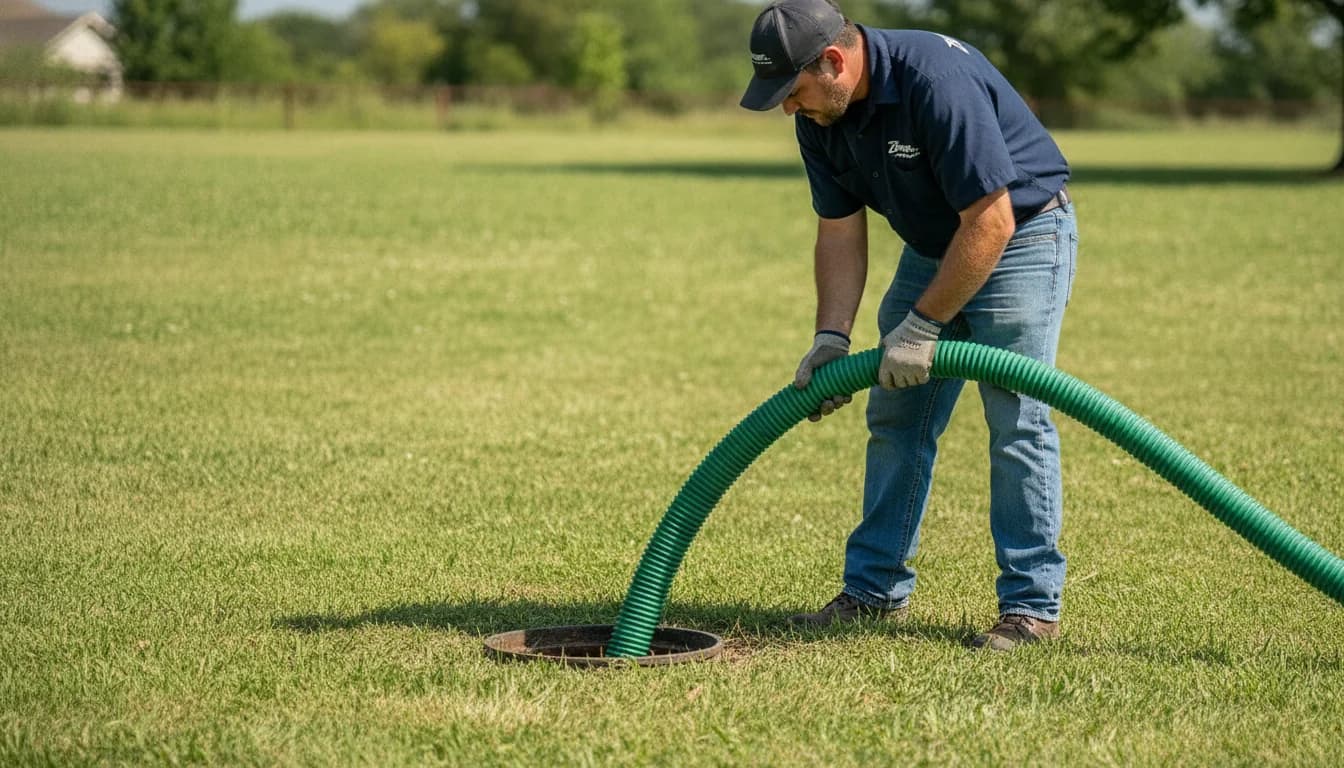
4. A Sewage Smell — Inside or Out
A properly functioning septic system is essentially odorless from the living areas of your home. When you start smelling sewage — near floor drains and bathrooms indoors, or out around the tank lids and drain field — gases that should be venting away are instead escaping because the system is backing up or the tank is full.
Outdoor sewage odor matters in Oklahoma for a specific reason: the state's rules require that effluent never "surface, pool, or flow across the ground." Surfacing sewage isn't just unpleasant — it's a health issue and a potential compliance problem. Urgency: call now, especially if the smell comes with any sogginess over the field.
5. Sewage Backing Up Into the House
This is the one nobody misses — dark water rising in the lowest drains or toilet, often in a basement or first-floor bathroom. By the time waste is coming back in, the tank is full and the system has nowhere left to put it. It's the late sign, the emergency, and the one that comes with cleanup and risk to the drain field.
Urgency: emergency — stop adding water and call immediately.Don't run more laundry or dishes hoping it clears; you're only adding to what has nowhere to go. Emergency septic service is available, but the goal of this whole article is to help you never get here.
"The backups we get called to at midnight almost always started as a slow drain somebody ignored months earlier. Nobody wants to spend money on a tank that 'seems fine.' But a scheduled pump is a couple hundred bucks and an hour of my time. A backed-up house and a dead drain field is a different conversation entirely."
— Troy Brower, Owner | Brower Inc. | Newkirk, OK
The $400 vs. $15,000 Math
The reason these signs are worth taking seriously is the brutal cost asymmetry between catching a problem early and catching it late:
| What you're paying for | When | Typical cost |
|---|---|---|
| Scheduled tank pump-out | On the early signs | $300–$650 |
| Emergency / after-hours pump after a backup | On the late signs | $450–$900+ |
| Drain field repair / partial replacement | After the field clogs | $3,000–$15,000 |
| Full system replacement | After total failure | $10,000–$25,000+ |
That's the whole argument in one table. The homeowners who get the five-figure bill are almost never careless people — they're people who "never had a problem," so they never pumped, right up until the field was already gone. For the full breakdown of what a pump-out actually costs and the factors that move the price, see our Oklahoma septic tank pumping cost guide.
Why Oklahoma Soil Raises the Stakes
If you live on rural property in Kay, Garfield, Noble, or Logan County, your drain field has less margin for error than the same system would in sandy soil. Much of north-central Oklahoma sits on dense red clay that drains slowly to begin with. When a tank is overdue and pushes solids into a clay-bound field, that field clogs faster and recovers slower than it would in looser ground — which is precisely why so many local homes run aerobic systems with spray dispersal instead of a conventional buried field.
Oklahoma's seasons add their own pressure. Heavy spring rain saturates the soil and leaves the field with nowhere to send water; hard winter freezes slow absorption further. A tank that's already near capacity going into a wet April is the one that surfaces. The takeaway: in Oklahoma clay, pump toward the shorter end of the 3–5 year window, not the longer one.
How Often Should You Actually Pump?
Signs are the backstop, not the schedule. The goal is to pump before any sign shows up. General guidance for Oklahoma:
- Conventional tank: every 3–5 years for an average household.
- Aerobic system: every 2–4 years (the pretreatment chamber fills faster).
- Larger household or daily garbage-disposal use: lean to the shorter end.
- Smaller tank or part-time/seasonal home: you may stretch the interval — but verify with a sludge check, not a guess.
The right move is to have the sludge depth measured at each service visit so the next pump is scheduled on data, not on a backup. For the complete homeowner routine — what to flush, what to never flush, and seasonal care — pair this with our Oklahoma septic system maintenance guide.
How Brower Inc. Helps
We've been pumping and servicing septic systems across northern Oklahoma since 1980 — conventional tanks, aerobic systems, commercial tanks, and grease traps. When you call us about any of the signs above, here's what you get:
- A DEQ-licensed pumper— not a general hauler — who can tell you whether it's a simple pump or something more.
- Flat all-in pricing — pump, rinse, inspection, and DEQ-compliant disposal in one number, quoted before we come out.
- No mileage surcharge inside our 14 Oklahoma and 6 Kansas counties — rural addresses included.
- An honest read on the tank, baffles, and field while we're on site, so small problems get caught early.
- A recommended next-pump date in writing, so you never have to guess again.
Headquartered in Newkirk, we run daily routes through Kay County and across north-central Oklahoma and southern Kansas. Buying or selling a place with a septic system? A septic inspection tells you exactly what condition it's in before you sign.
Caught a warning sign? Get it pumped before it becomes a backup.
Tell us your address and we'll quote pump + inspection + DEQ disposal in one flat number — no mileage surcharge inside our 20-county service area. Call (580) 747-6206 or send us the details and we'll get you on the schedule.
Frequently Asked Questions
Watch for five signs: (1) drains all over the house running slow at once; (2) toilets and drains gurgling; (3) a patch of grass over the drain field that's suddenly greener, taller, or soggy; (4) a sewage smell inside or out near the tank; and (5) sewage backing up into the lowest drains. Any one of these is your cue to schedule a pump — and if you simply can't remember the last time it was done, it's almost certainly due regardless of symptoms.
Don't Wait for the Backup
A septic system gives you plenty of warning before it fails — slow drains, a gurgle, a too-green patch of grass, a faint smell. None of those are the disaster; they're the chance to avoid one. The homeowners who keep their systems running for thirty years are simply the ones who treat a slow drain as a phone call instead of a shrug.
Brower Inc. is locally owned in Newkirk, fully DEQ-licensed, and pumps and services septic systems across 14 Oklahoma and 6 Kansas counties — flat pricing, no surprise fees, and a real person on the phone. Call (580) 747-6206 or request a septic service quote.
Related reading
Related guides
Our services
Service areas